Joke Books in the Classroom
Why Joke Books Belong in the Classroom
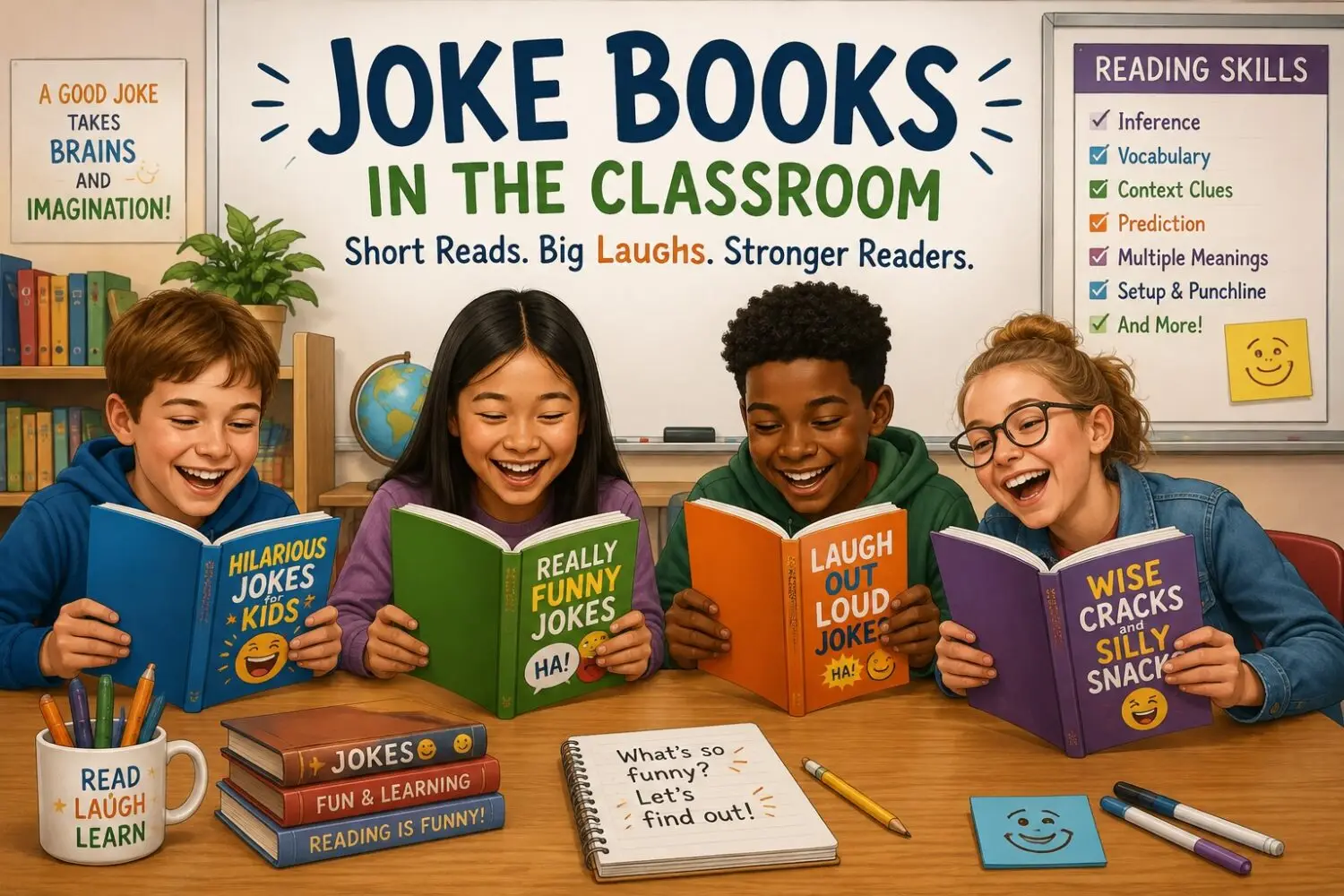
Joke books in the classroom may look like simple entertainment, but there’s a surprising amount of reading going on between the laughs. To understand a joke, readers often need to make an inference, recognize multiple meanings, use background knowledge, predict what might happen next, and then realize why the punchline went in an unexpected direction.
That makes joke books especially useful for students with different reading abilities. A struggling or reluctant reader may be much more willing to tackle a two-line joke than a full page of text. Stronger readers can dig deeper by examining wordplay, ambiguity, figurative language, and the clever ways writers create and then overturn expectations.
Best of all, using joke books to teach reading doesn’t have to feel like another reading assignment. Students get the immediate reward of understanding—and hopefully laughing at—the joke. Meanwhile, teachers can use that same tiny piece of text to practice many of the skills students need when reading longer and more complex literature.
Why Joke Books Work for Different Reading Levels
Not every student approaches a page with the same confidence. For some readers, a long chapter can feel intimidating before they even begin. A joke offers something much smaller: a setup, a punchline, and a reason to keep reading.
That short format can be especially inviting for reluctant and developing readers. Students can read one joke, figure it out, and experience success in a matter of seconds. Then they can move on to another. Stronger readers, meanwhile, can look beneath the laugh and explore why a joke works, how language creates surprise, or how changing a single word can ruin the punchline.
Joke books can also help teachers meet students at different reading levels without making the differences quite so obvious. Everyone can be reading jokes, while the questions, discussions, and activities surrounding those jokes can vary in complexity.
A joke may take only seconds to read, but understanding why it’s funny can require some surprisingly sophisticated reading skills.
The Reading Skills Hiding Inside a Joke
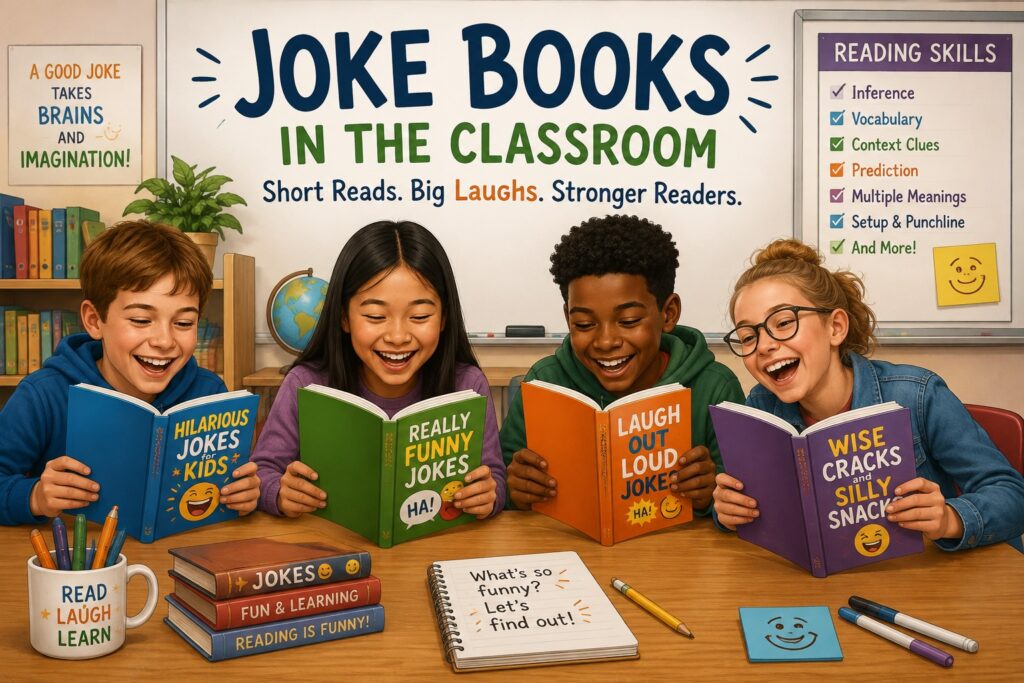
A good joke asks readers to do more than simply recognize the words on the page. To reach the punchline, they often have to make predictions, draw inferences, understand vocabulary in context, recognize multiple meanings, and connect the setup with information they already know.
Wordplay adds another layer. A reader may initially interpret a word or phrase one way, only to discover that the punchline depends on a completely different meaning. That little mental switch is part of what makes a joke funny—and it gives students practice with the same flexible thinking they use when reading stories, poems, and other kinds of literature.
Even the basic structure of a joke can become a reading lesson. Students can identify the setup and punchline, predict possible endings, explain why a punchline works, or examine what information the writer deliberately withheld until the end.
Want to put those skills to work with your students? PurdyBooks offers free Joke Book Reading Activities designed to help students explore the reading skills behind the laughs.
Using Joke Books to Teach Reading
Joke books can give teachers an unusually flexible way to practice reading skills. A single joke might become a quick lesson on inference, vocabulary, prediction, context clues, or multiple meanings. A few jokes can spark a class discussion, provide material for small-group work, or give students a chance to explain their thinking to one another.
They can also work across subject areas. Math jokes may depend on understanding numbers or mathematical vocabulary, while science jokes can require background knowledge about animals, space, chemistry, or the human body. Sports and travel jokes draw on entirely different experiences. Choosing jokes that connect with what students are already learning—or simply what they enjoy—can give them another reason to read closely.
And sometimes the best classroom use is simply to let students read and laugh. Enjoyment matters. When students voluntarily read one joke and then another, share favorites with classmates, or try to figure out a punchline before reaching it, they’re spending more time engaged with language.
Looking for ideas for using joke books with your students? The free companion Teacher Guide at PurdyBooks includes suggestions for turning jokes into meaningful—and enjoyable—reading experiences.
Choose Joke Books That Match Student Interests
One of the easiest ways to encourage students to read is to give them something they actually want to read. Joke books make that easier because they come in almost every subject imaginable. A student who loves sports may happily browse a book of sports jokes, while another might prefer jokes about science, math, animals, holidays, or travel.
Themed joke books can also connect reading with other subjects. A math joke may make more sense once a student understands the mathematical idea behind it. Science jokes can introduce unfamiliar vocabulary or reward students for recognizing something they have already learned. In both cases, understanding the joke requires readers to connect language with knowledge.
Using joke books in the classroom can also help teachers connect reading with students’ individual interests. Teachers don’t necessarily need one joke book that appeals to everyone. A small assortment of funny books covering different subjects gives students a chance to follow their own interests—and perhaps discover a new one along the way.
Help students find the kind of humor they enjoy:
Illustrated Joke Books
Math Joke Books
Sports Joke Books
Clean Joke Books for Kids & Adults
Getting the Joke Means Making an Inference
One of the most interesting things about jokes is that writers rarely explain everything. They leave something for the reader to figure out. To “get” the joke, students often have to combine clues from the setup with their own background knowledge and make an inference about what the punchline really means.
That can happen incredibly quickly. A student reads the setup, forms an expectation, reaches the punchline—and suddenly realizes that a word, phrase, or situation can be understood in a completely different way. The laugh often comes at the exact moment that second meaning clicks.
This makes jokes useful little pieces of text for talking about inference and comprehension. Instead of simply asking, “What was the answer?” a teacher can ask, “Why is that funny?” Explaining the humor requires students to put their understanding into words. Sometimes explaining a two-line joke takes considerably more thinking than reading it.
Riddles can work much the same way. They encourage readers to look for clues, consider more than one possibility, and resist jumping at the first obvious answer.
Joke Books for Every Kind of Reader
Students are more likely to pick up a book when the subject already interests them. That’s one reason themed joke books can be such a good fit for classrooms, school libraries, independent reading, and even reluctant readers.
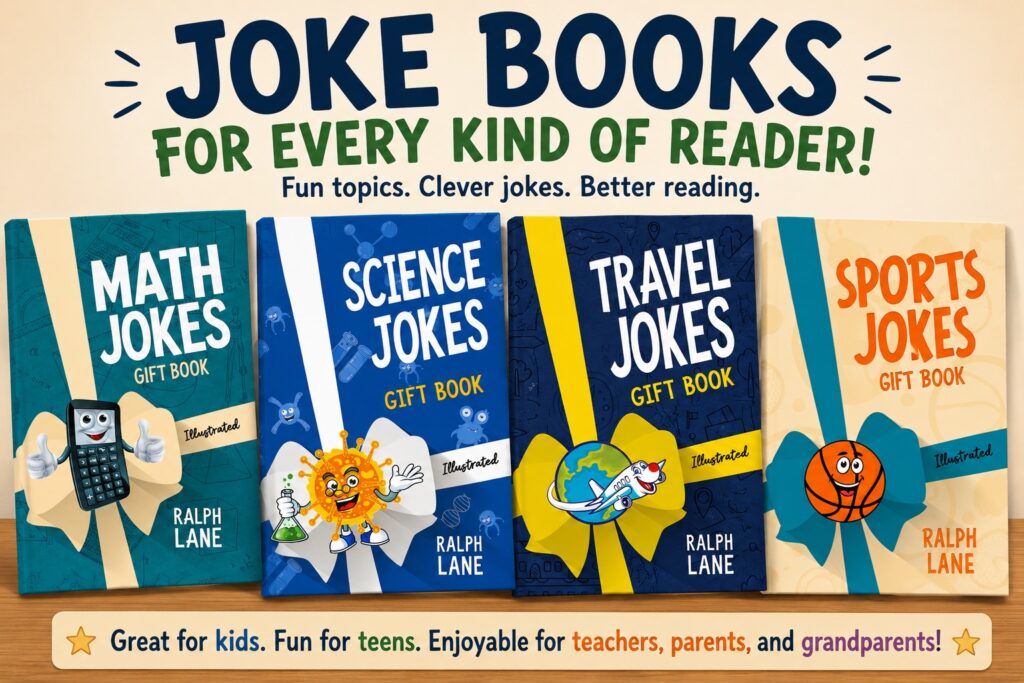
Ralph Lane’s illustrated joke books combine short, easy-to-browse jokes with colorful illustrations and familiar subjects. A student who enjoys numbers might gravitate toward math jokes. A budding scientist can explore science humor, while sports fans and young travelers can find jokes connected with things they already enjoy.
These books aren’t just for students, either. Teachers can keep them in classroom libraries, use individual jokes as quick reading examples, or simply give students something fun to read during free-reading time. They also make lighthearted gifts for teachers, students, parents, and other joke lovers.
Choose a joke book by interest:
📘 Math Jokes: Gift Book for All Ages
📘 Science Jokes: Gift Book
📘 Sports Jokes: Gift Book for All Ages
📘 Travel Jokes: Gift Book